
032c MAGAZINE
Issue #20 2010/11
Written Article; Postcards from Guangzhou
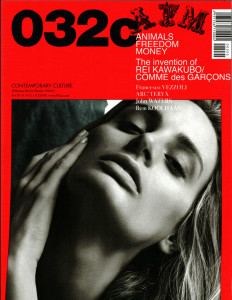
A Postcard From Guangzhou, Charlie Koolhaas, Issue #20 2010/11
Covered in mold. On alternative forms of freedom and five years of household possessions in China’s #3
Unless you are in business there, you are unlikely to know of Guangzhou. China’s third-largest, oldest, and most misunderstood city – and one of the globe’s most crazed – it has been a major trade capital for over 2000 years. Today, the city and its surrounding Guangdong province houses a nuclear power station, 800,000 factories, and 120 million people, and provide the world with 80% of its furniture and clothes. Yet it doesn’t fit the stereotypical image of China as an evil isolationist empire. The Guangdong province was the first to experiment with free-market socialism in 1983, and Guangzhou has always been afforded freedom not found elsewhere in China: it has always been the furthest from government control. The resulting explosion of activity has created a completely new version of “freedom” that attracts all sorts of opportunism – there is not a person who comes to Guangzhou on holiday and leaves without considering bringing back a few dozen car stereos to sell.
But Guangzhou is harsh, chaotic, and calls into question that outsider logic. A third of its population is made up of illegal migrants from around China, who arrive balancing entire families, household possessions, and farm animals on single motorized bicycles.
The rest is a global microcosm: mobile phone manufacturers from Uzbekistan, shoe wholesalers from Namibia, graphic designers from Australia, and prostitutes from Croatia go to participate in the city’s grey market free-for-all. Hence its high crime rate and reputation as a money-laundering spot for the Hong Kong triads and al-Qaeda, the hitmen who approach you looking for work, and the posters advertising plastic surgeons who reattach limbs.
Guangzhou is entirely coated in a hostile organism, which lives on its every surface. It is like living in an industrial-sized petri dish. Each day, we scrubbed and cleaned, so that it would be barely noticeable. Still, the air was thick with it, the houses reeked of it, and the water left brown stains on our clothes. It came hurtling out of air-conditioning units. My sinuses felt like they might start bleeding at any moment; clogged yet dry. After a while the area below my eyes started to twitch. I felt the mold creeping into my tear ducts. I imagined that the next time I cried, my tears would be black. There was a strange, slimy coating on the roof of my mouth and my left lung was beginning to ache. I remembered a documentary I had once seen on the Discovery Channel about a man who had sniffed mold and had to have half his face removed. I experienced a rush of panic at the thought. My stomach had already bled twice – was this the cause? I was tired, like everybody in Guangzhou. Any time you asked people how they felt, they would always say “tired”.
My mysterious internal bleeding had led me to the ex-pat hospital. It was run by an overweight, Swedish tropical disease specialist, who told me that my stool did, in fact, have blood in it. He said that he had no way of knowing the cause, but asked me if I had stepped in any untreated water recently – in which case, it could be microbial organisms that had entered through a cut in my leg, and had taken root in my intestine. He recommended that I “go home, go home now,” before I became too weak to get on a plane.
Then, as though to make up for his uselessness, he offered to insert his finger into my anus.
“Will that help?” I asked, to which he replied “No, not help. But it would allow me to see if there are any tumors around the anus.”
“Does that seem like it might be the case?” I asked, shocked.
“No,” he replied, “not really. But really it’s the only thing that I can offer you.”
I was confused. I declined. I later found out that he had moved to Guangzhou to practice medicine after being struck from the European doctors’ list.
Armed with a dank face mask and a bucket of bleach-soaked sponges, I sorted through five years of “To Do” lists that were virtually indistinguishable from each other, now all covered in sticky black spores – the papers’ triumphant return to nature. I bubble-wrapped 5 RMB (ca. $0.75 US) toys that would cost 100 times that to ship, only so that all my time in the toy market would not have been wasted.
Most of my clothes were ruined. When my 26 boxes were finally packed and ready to ship, they contained a random selection of worthless items that I had picked up over the years – lifestyle magazines stolen from trains, fluffy keyrings that played techno songs, or books dedicated to nail-art, all things that had seemed crucial in helping me digest the culture.
My Facebook status read: “Charlie Koolhaas has discovered how stressful it is spending 10 days cleaning flesh-eating mold from your possessions, packing them into 26 cardboard boxes – dislocating your right arm in the process – and then loading them onto a roofless, sideless, and backless shipping van, only for the most monumental tropical storm to start as the driver pulled away. I beg him to come back, and he says, ‘No it’s okay – I will park the van overnight with your stuff in it against a wall for shelter.’ But since when has a wall been a shelter?”
032c MAGAZINE
Issue #20 2010/11
Written Article; Postcards from Guangzhou
A Postcard From Guangzhou, Charlie Koolhaas, Issue #20 2010/11
Covered in mold. On alternative forms of freedom and five years of household possessions in China’s #3
Unless you are in business there, you are unlikely to know of Guangzhou. China’s third-largest, oldest, and most misunderstood city – and one of the globe’s most crazed – it has been a major trade capital for over 2000 years. Today, the city and its surrounding Guangdong province houses a nuclear power station, 800,000 factories, and 120 million people, and provide the world with 80% of its furniture and clothes. Yet it doesn’t fit the stereotypical image of China as an evil isolationist empire. The Guangdong province was the first to experiment with free-market socialism in 1983, and Guangzhou has always been afforded freedom not found elsewhere in China: it has always been the furthest from government control. The resulting explosion of activity has created a completely new version of “freedom” that attracts all sorts of opportunism – there is not a person who comes to Guangzhou on holiday and leaves without considering bringing back a few dozen car stereos to sell.
But Guangzhou is harsh, chaotic, and calls into question that outsider logic. A third of its population is made up of illegal migrants from around China, who arrive balancing entire families, household possessions, and farm animals on single motorized bicycles.
The rest is a global microcosm: mobile phone manufacturers from Uzbekistan, shoe wholesalers from Namibia, graphic designers from Australia, and prostitutes from Croatia go to participate in the city’s grey market free-for-all. Hence its high crime rate and reputation as a money-laundering spot for the Hong Kong triads and al-Qaeda, the hitmen who approach you looking for work, and the posters advertising plastic surgeons who reattach limbs.
Guangzhou is entirely coated in a hostile organism, which lives on its every surface. It is like living in an industrial-sized petri dish. Each day, we scrubbed and cleaned, so that it would be barely noticeable. Still, the air was thick with it, the houses reeked of it, and the water left brown stains on our clothes. It came hurtling out of air-conditioning units. My sinuses felt like they might start bleeding at any moment; clogged yet dry. After a while the area below my eyes started to twitch. I felt the mold creeping into my tear ducts. I imagined that the next time I cried, my tears would be black. There was a strange, slimy coating on the roof of my mouth and my left lung was beginning to ache. I remembered a documentary I had once seen on the Discovery Channel about a man who had sniffed mold and had to have half his face removed. I experienced a rush of panic at the thought. My stomach had already bled twice – was this the cause? I was tired, like everybody in Guangzhou. Any time you asked people how they felt, they would always say “tired”.
My mysterious internal bleeding had led me to the ex-pat hospital. It was run by an overweight, Swedish tropical disease specialist, who told me that my stool did, in fact, have blood in it. He said that he had no way of knowing the cause, but asked me if I had stepped in any untreated water recently – in which case, it could be microbial organisms that had entered through a cut in my leg, and had taken root in my intestine. He recommended that I “go home, go home now,” before I became too weak to get on a plane.
Then, as though to make up for his uselessness, he offered to insert his finger into my anus.
“Will that help?” I asked, to which he replied “No, not help. But it would allow me to see if there are any tumors around the anus.”
“Does that seem like it might be the case?” I asked, shocked.
“No,” he replied, “not really. But really it’s the only thing that I can offer you.”
I was confused. I declined. I later found out that he had moved to Guangzhou to practice medicine after being struck from the European doctors’ list.
Armed with a dank face mask and a bucket of bleach-soaked sponges, I sorted through five years of “To Do” lists that were virtually indistinguishable from each other, now all covered in sticky black spores – the papers’ triumphant return to nature. I bubble-wrapped 5 RMB (ca. $0.75 US) toys that would cost 100 times that to ship, only so that all my time in the toy market would not have been wasted.
Most of my clothes were ruined. When my 26 boxes were finally packed and ready to ship, they contained a random selection of worthless items that I had picked up over the years – lifestyle magazines stolen from trains, fluffy keyrings that played techno songs, or books dedicated to nail-art, all things that had seemed crucial in helping me digest the culture.
My Facebook status read: “Charlie Koolhaas has discovered how stressful it is spending 10 days cleaning flesh-eating mold from your possessions, packing them into 26 cardboard boxes – dislocating your right arm in the process – and then loading them onto a roofless, sideless, and backless shipping van, only for the most monumental tropical storm to start as the driver pulled away. I beg him to come back, and he says, ‘No it’s okay – I will park the van overnight with your stuff in it against a wall for shelter.’ But since when has a wall been a shelter?”